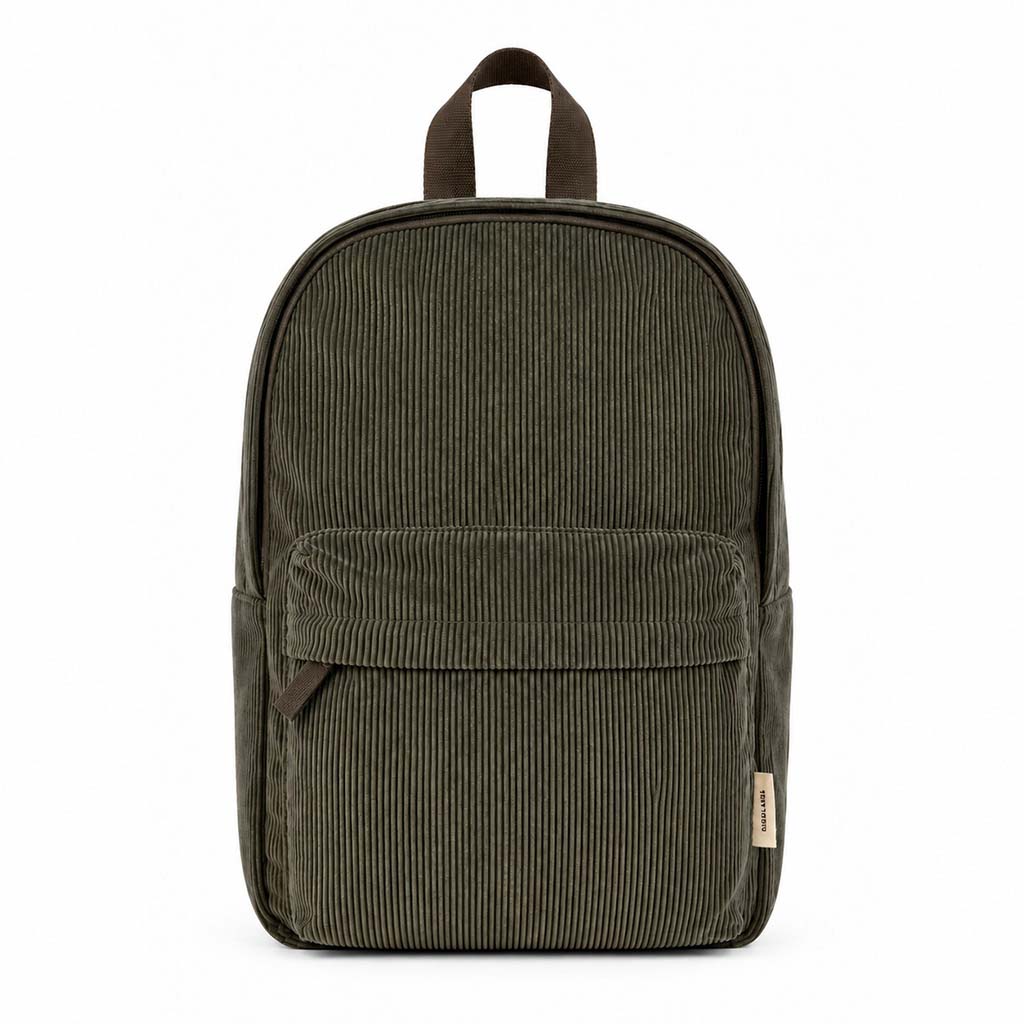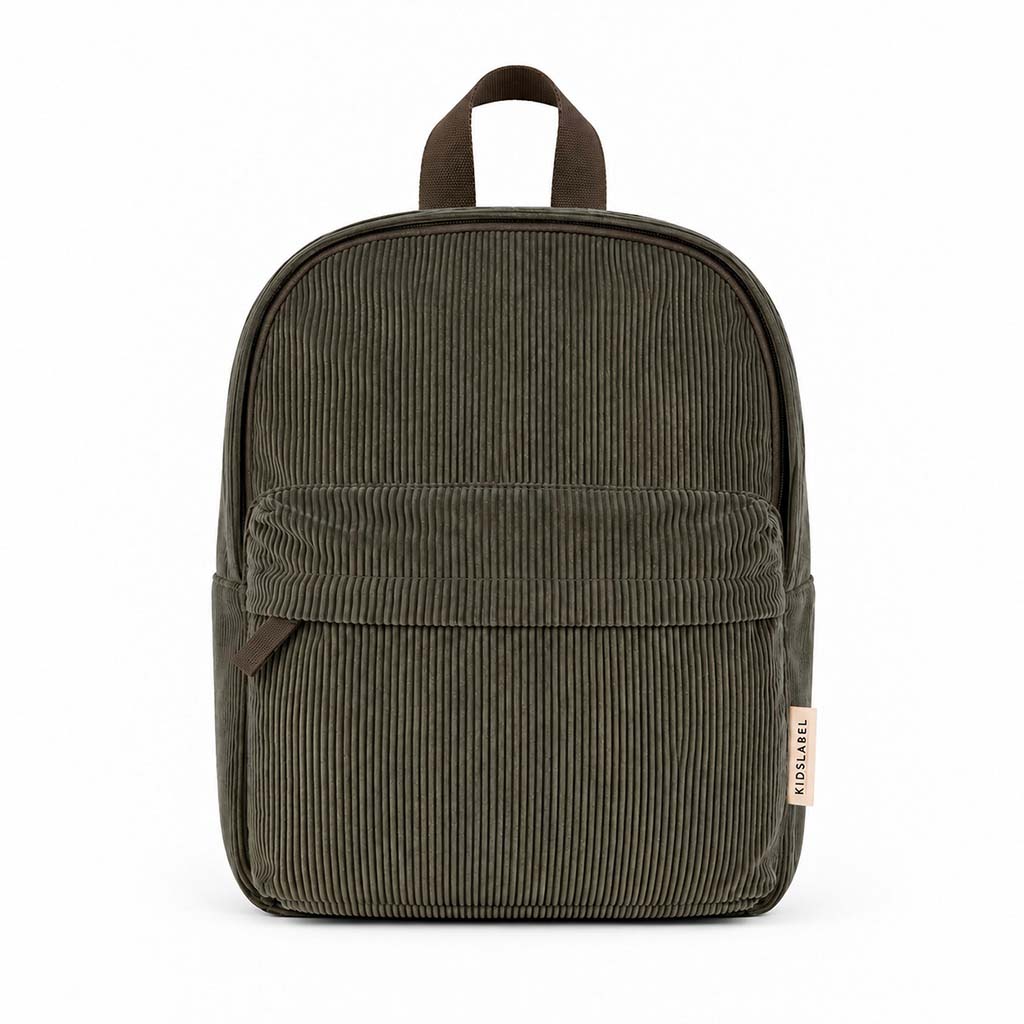
Compare the sizes
Small measures 29 × 22.5 × 10 cm, with a listed recommended age of 3 years. Large measures 38 × 25 × 13 cm, with a recommended age of 6 years. Small is therefore the model to consider for a toddler; Large is intended for an older child.
Age is a starting point, not a guarantee of fit. Compare the measurements with a bag your child already uses. Check what nursery or school requires and measure your cup or lunchbox. We cannot promise every container will fit without the pocket’s internal dimensions.
A place for everyday things
Both Forest Green models have a zipped front pocket, a dedicated cup pocket, one slip pocket and an inside name label. The label lets you identify the bag without changing its exterior.
Think about what needs to stay separate, such as spare clothing and a cup. The detail photographs on each product page help you assess the layout.
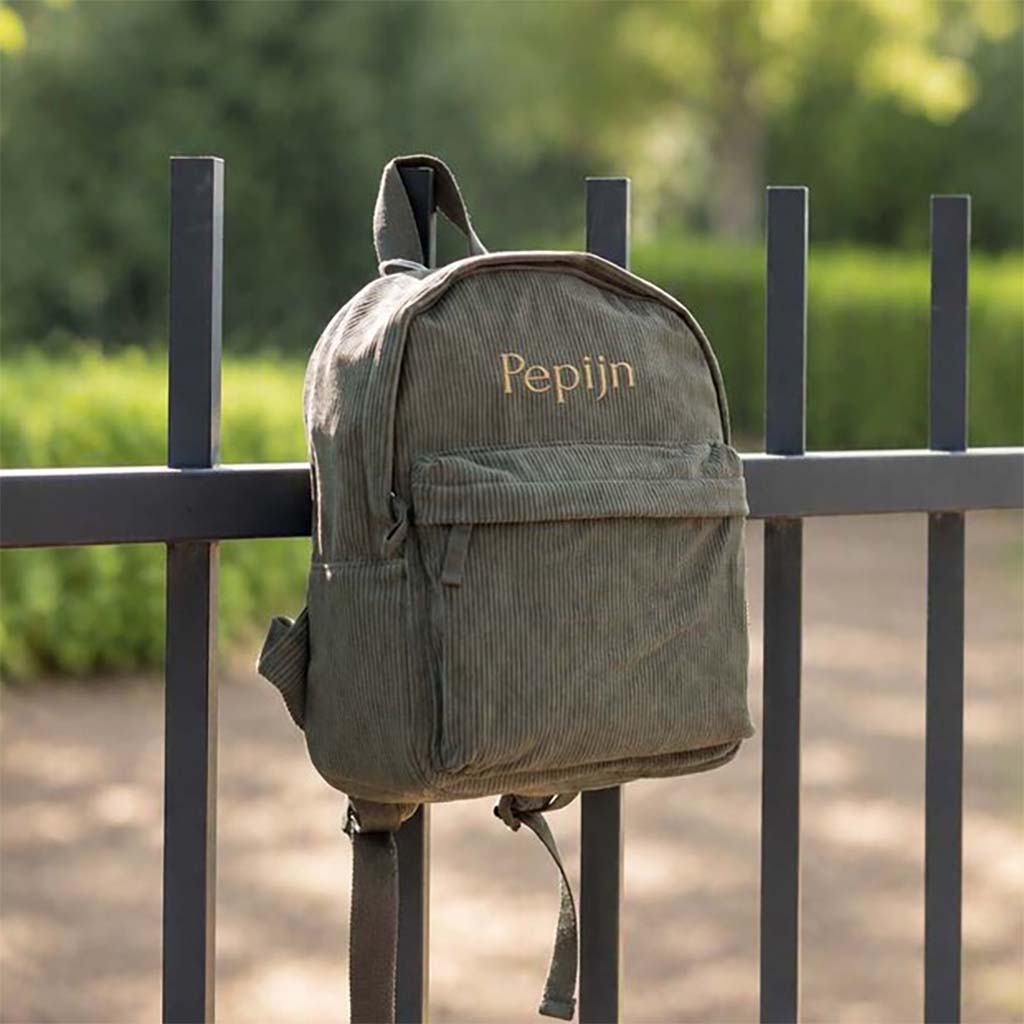
Straps, material and care
The shoulder straps are adjustable. Check their fit with the bag on your child’s back and adjust them as your child grows. Both models are 100% polyester with a ribbed corduroy appearance.
Hand wash only; do not tumble dry. Always follow your product label, as care instructions differ between models. Let the bag dry before filling it again. Ordering and the new personalisation tool are not available yet.
Start with an ordinary nursery day
Choosing a backpack starts with what your child actually takes along, rather than the largest bag available. Ask nursery staff which items stay on site and which need to travel each day. Spare clothing might already be kept at nursery, or it might need to come home after every visit. Put the everyday items together on a table before comparing bags. This gives you a clearer starting point than imagining every possible outing and buying for the busiest exceptional day.
Separate what your child carries from the supplies you carry yourself. A first backpack does not need to hold everything the family might need. A cup, one change of clothing and a small personal item take up a different amount of space from a lunchbox and several outfits. Measure the outside of the main containers and compare them with the published bag measurements. These are not internal pocket measurements, so allow for the shape of the bag and the space its opening needs to close comfortably.
Consider fit as well as the recommended age
Small and Large have different published dimensions, but age alone cannot tell you how a bag will sit. Children of the same age differ in height and build. Use the listed age as a starting point for your comparison, not a guarantee of fit. If your child already has a bag that suits them, compare its height and width with the Kidslabel dimensions. A larger capacity is not automatically the right reason to choose a larger model.
Check adjustable shoulder straps with the intended contents inside, rather than only with an empty bag. Help your child put the backpack on and see how the straps sit. Can they move freely and reach the opening? Can you see and retrieve the items without unpacking everything? Avoid adding unnecessary things simply because there is space left. We have not been supplied with a maximum carrying weight or ergonomic certification for these models, so neither should be assumed from their appearance.
Give daily items a familiar place
A consistent layout can make packing together easier. Decide where the cup belongs and where spare clothing should go. The zipped front pocket, slip pocket and dedicated cup pocket offer different options, but examine the detail photographs to understand their construction. A pocket name does not tell you the width of its opening or promise that a particular container will fit. Keep damp clothing and items that could leak separately wrapped; these backpacks are not described here as waterproof.
Use the inside name label to identify the bag, and check occasionally that the writing is still readable. Follow your nursery’s preferences about the information to include. This is separate from embroidery on the outside: the future design tool is not available yet. Keeping the same layout gives you a simple way to check the bag together before leaving. When you return, remove used clothing and food remnants before preparing it for the next day, rather than letting yesterday’s contents become tomorrow’s missing space.
Use the photographs alongside the specifications
An overview photograph shows the overall look; closer photographs help you examine the construction. For these Forest Green models, look at the exterior, the visible pockets and the shoulder straps. Then read the material and care information. Corduroy describes the ribbed appearance here, while the stated fibre composition is 100% polyester. Distinguishing the texture name from the fibre content helps you avoid expecting a different material on the basis of a collection name alone.
Keep your comparison focused on three practical questions. Do the everyday items appear compatible with the outside dimensions? Does the size make sense for your child? Is hand washing suitable for the way you plan to care for the bag? Visit both full product pages rather than deciding from a homepage photograph alone. You can also explore the collection for other Kidslabel items for outings. Our changing-bag organisation article is useful if you carry baby supplies yourself alongside your child’s backpack; these two bags serve different purposes.
Frequently asked questions
Which model has a recommended age of three years?
The Corduroy Small lists a recommended age of 3 years, while Large lists 6 years. Combine this information with the dimensions and your child’s build. It does not mean one model will fit every child of that age equally well.
Will every cup fit in the cup pocket?
We cannot confirm that. Both models have a dedicated cup pocket, but internal measurements and maximum cup dimensions have not been provided. Compare your cup with the photographs and contact us if you need information about a particular fit.
Can these backpacks be machine washed?
The two Corduroy Forest Green models discussed here require hand washing and must not be tumble dried. Do not apply this instruction automatically to another backpack. The label on the individual product remains your reference for cleaning.
Can I order an embroidered backpack now?
No. Ordering and personalisation are temporarily unavailable. You can still view the real product photographs, measurements and features. The inside name label belongs to the bag; exterior embroidery will be offered later through a design tool.